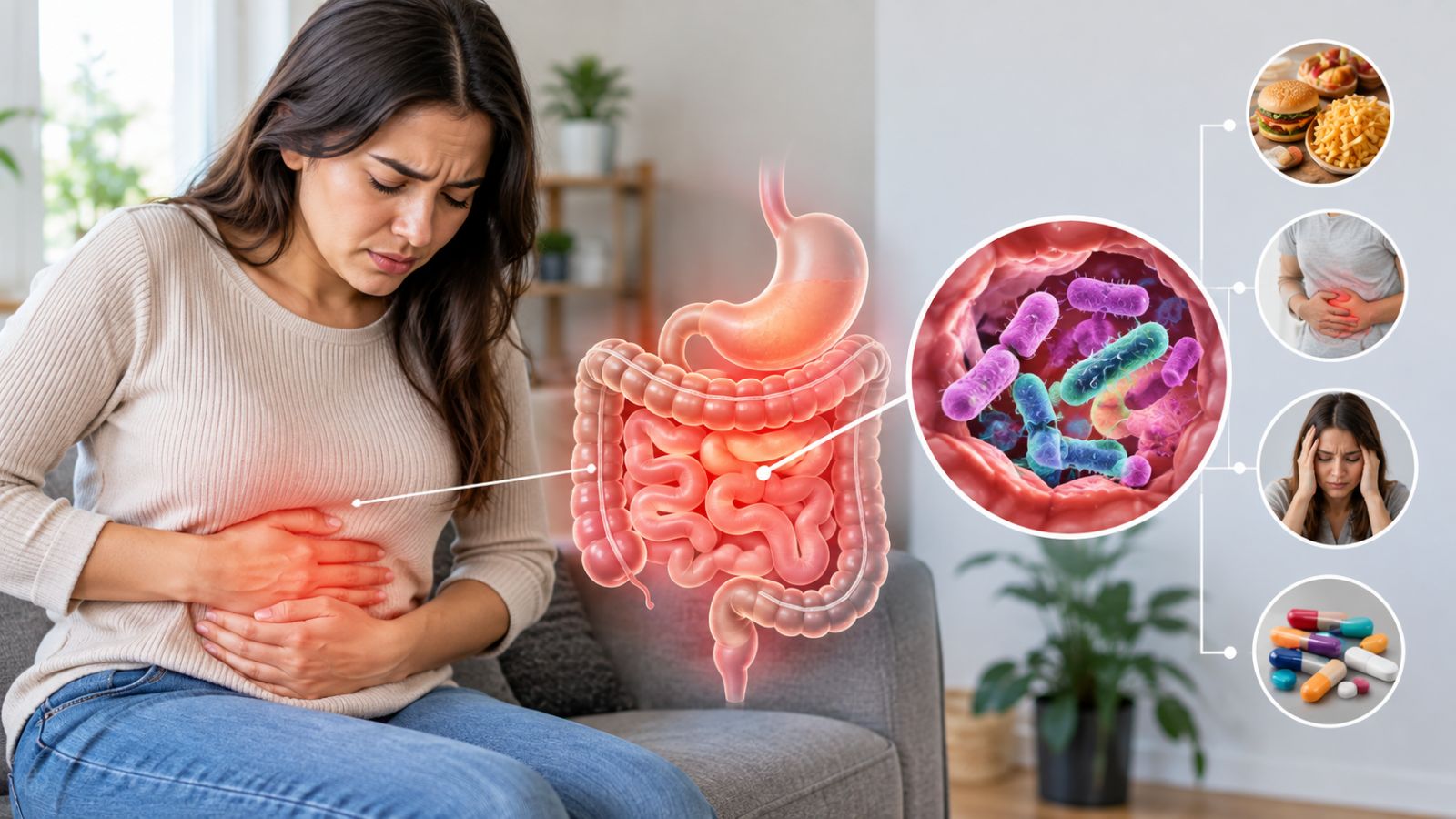
Being bloated, feeling overly full after meals, or having gas and variations in bowel habits and other digestive troubles can be frustratingly unclear for anyone experiencing these issues, particularly when they cannot pinpoint what is causing them. An illness that may be connected to problems with digestion is known as small intestinal bacterial overgrowth (SIBO), which occurs when bacteria in the intestines are overrepresented or unbalanced.
SIBO is not only about having too many “bad” bacteria. The number of bacteria in the small intestine is lower than in the colon, while intestinal motility, digestive juices, and other protective mechanisms provide the balance of bacteria in the intestines. The bacteria will begin to multiply if there is a breach of any of these mechanisms.
It is essential to understand what are the symptoms of SIBO in order to know when it’s necessary to seek treatment for digestive issues. However, it is important to note that the symptoms of SIBO can be present together with signs of other digestive diseases, meaning that the symptoms alone will not allow you to confirm the diagnosis. In Sydney, the majority of patients seek consultation for possible SIBO treatment, interested in being properly diagnosed before immediately changing the diet or taking supplements.
The inquiry regarding what are the symptoms of SIBO arises because the illness may vary in different people.
Some prevalent signs may include:
SIBO might also be connected to the development of fatigue and alternating diarrhea and constipation.
The emergence of symptoms is partly attributed to the interaction of bacteria with food in the small intestine. The growth of bacteria may cause the generation of excess gas and distort the process of nutrient absorption.
For instance, a person may eat a normal-sized piece of food and experience bloating in a few hours. Another person can have primarily loose stools, while the third one will suffer from constipation and pressure in the stomach. So, due to the variability of symptoms, SIBO should not be diagnosed only based on symptoms.
Occasional bloating after a large meal is common and does not automatically indicate SIBO.
Recurring symptoms deserve more attention when they are:
In case of persistent diarrhea, significant involuntary weight loss, or pain in the abdomen for a prolonged period, medical treatment rather than self-treatment for SIBO is required. In case of severe abdominal pain, quick medical help is obligatory.
Thus, SIBO development results from the fact that the mechanisms of the regulation of bacteria in the intestines stop working properly. One of the main reasons is the slow peristalsis of the intestine. The gastrointestinal tract is supposed to keep moving food and contents in the direction of the anus. However, if somehow the movement becomes slower, the bacteria become stagnant in some part for longer than is required.
There are some causes of SIBO development. There are certain disorders of a structural nature, which may block the normal peristalsis of the gastrointestinal tract. Various diseases increase the chances of suffering from SIBO, such as Crohn’s Disease, celiac disease, diabetes, scleroderma, and diseases causing problems with intestinal motility.
Previous abdominal surgery can also be relevant.
This is an important distinction: SIBO is often a consequence of another problem rather than an isolated condition appearing without a reason.
That is why a good SIBO assessment should look beyond the immediate digestive symptoms.
Imagine two people with almost identical bloating.
Person A developed symptoms after abdominal surgery and has ongoing problems with intestinal movement.
Person B has no surgical history but has constipation and symptoms suggestive of another gastrointestinal disorder.
Their symptoms may look similar, but their clinical situations are very different. Treating both people with exactly the same strategy without investigating the background may miss the reason their symptoms developed.
This is where SIBO support should be practical rather than based on a one-size-fits-all protocol.
A healthcare professional may review:
The goal is not simply to label symptoms. It is to understand what may be driving them.
There is no single symptom that proves someone has SIBO.
One commonly used investigation is a hydrogen or methane breath test. During testing, a person consumes a specific sugar solution and breath samples are collected over time. The gases measured can provide indirect evidence of bacterial activity in the digestive tract.
Breath testing has limitations, however. It is not a perfect test and results need to be interpreted alongside symptoms and clinical history. Mayo Clinic also notes that breath testing is widely available but less specific than some other diagnostic approaches.
A thorough assessment may also consider whether another condition better explains the symptoms. Depending on the situation, a clinician may investigate nutritional deficiencies, malabsorption, structural problems or other gastrointestinal disorders.
This matters because bloating, diarrhoea and abdominal discomfort occur in many conditions. Assuming every case of bloating is SIBO can delay the correct diagnosis.
Finding the best SIBO treatment may lead people in the direction of limiting diets, vitamins, and treatments that claim to “reset” the gut.
This is not the full picture. Treatment can entail the use of antibiotics, and treatment is focused on what caused SIBO initially. The American College of Gastroenterology claims that antibiotics can combat the issue of bacterial overgrowth but that the problem can recur and that what led to the issue should be resolved.
Similarly, the Mayo Clinic states that treatment may involve addressing structural and underlying problems, correcting nutritional deficits, and eliminating bacterial overgrowth. This means that the most appropriate type of treatment will vary from person to person.
Someone who is nutritionally deficient may require nutritional assistance, while someone who is experiencing a motility problem may need help in this area. It is worth noting that antibiotics should not be taken lightly or loosely, and they should not be taken unless they are warranted and a doctor’s advice is sought.
Diet is likely to assist the management of the symptoms but should not be regarded as a cure. Individuals may notice that certain carbohydrates or fermentable foods increase bloating and gas. The assistance of dietitians can help to identify triggers while ensuring the nutritional suitability of the diet.
This is significant because extremely restrictive diets may pose several challenges in maintaining the diet as well as avoiding important foods. When it comes to small intestinal bacterial overgrowth treatment, dietary changes must be viewed as part of an overall management plan, rather than a substitute for a medical diagnosis or treatment.
An Accredited Practising Dietitian is especially helpful when gastrointestinal symptoms are causing problems with food. According to Healthdirect, dietitians can provide support to individuals with gastrointestinal conditions and dietary concerns, and make sure to check their credentials if looking for a practitioner in Australia.
If you are preparing for an appointment, keeping a short symptom record can make the consultation more useful.
Record:
Mayo Clinic recommends preparing information about symptom timing, changes in symptoms, medical history, medications, supplements and previous abdominal surgery before an appointment.
People researching SIBO treatment in Sydney should look for an approach that begins with assessment and considers the wider gastrointestinal picture. Depending on the circumstances, this may involve a GP, gastroenterologist, dietitian or another appropriately qualified healthcare professional.
The important point is that treatment should be based on the person’s symptoms and clinical circumstances rather than a generic SIBO protocol.
Understanding what are the symptoms of SIBO is useful, but recognising symptoms is only the beginning. Bloating, gas, abdominal discomfort and bowel changes can have many causes, and SIBO needs to be considered within the wider clinical picture.
For anyone considering SIBO treatment in Sydney, a careful SIBO assessment can help move the conversation away from guesswork and towards a more informed management plan. When symptoms are persistent, worsening, or accompanied by weight loss or significant bowel changes, professional medical advice is particularly important. To get the best medical advice, please visit us at Solutions To Health today!
It can contribute to recurring bloating, gas and abdominal discomfort, but daily bloating does not automatically mean SIBO. Constipation, IBS, dietary factors and other gastrointestinal conditions can produce similar symptoms. Persistent bloating should therefore be assessed in context rather than self-diagnosed.
No. SIBO and IBS are different conditions, although their symptoms can overlap considerably. A person with IBS-like symptoms may be investigated for several possible causes, including SIBO where clinically appropriate. Having bloating or altered bowel habits alone is not enough to establish either diagnosis.
Yes. Recurrence can occur, particularly when an underlying factor contributing to bacterial overgrowth remains. The American College of Gastroenterology notes that SIBO can recur after treatment and may require further management.
It is generally better to discuss significant dietary changes with an appropriately qualified healthcare professional first. A restrictive diet may alter food intake without addressing the actual cause of symptoms, and unnecessarily eliminating multiple food groups can make it harder to maintain balanced nutrition.
Start with a proper clinical assessment. Keep track of your symptoms, bowel habits, food patterns, medications and relevant medical history. A clinician can then decide whether SIBO testing or investigation for another gastrointestinal condition is appropriate.

I am a Sydney based Naturopath and I am passionate about Women's Health, Natural Fertility Treatments and Infertility Management. I am also a Neurofeedback Practitioner using NeurOptimal® brain training system. I specialise in optimising Fertility, Women's health, Preconception care, Reproductive Healthcare for men and women, Miscarriage prevention and managing Menopause. I use both conventional and complementary health care methods to diagnose and treat health issues. I provide very effective treatment, using evidence based natural medicine and guide and support my patients to achieve better health. Personally, my own experience using complimentary Medicine has reinforced my belief and passion for helping people to be healthier.
Dorota Wroblewska is an experienced Naturopath and Nutritionist in Sydney. Dorota specialises in women's health, natural fertility, preconception care and reproductive healthcare for men and women. Dorota also offers natural health solutions for all health concerns, including digestive disorders, thyroid problems and adrenal dysfunction. Dorota is also a Neurofeedback trainer, using NeurOptimal® brain training system.