For many couples trying to conceive, fertility challenges can come as an unexpected emotional and physical journey. One of the biggest misconceptions surrounding fertility is that difficulties conceiving are usually related to women alone. In reality, Male Infertility contributes to nearly half of all infertility cases worldwide.
Understanding the causes of male fertility problems is one of the first steps toward finding the right support, diagnosis, and treatment plan. Today, advances in reproductive medicine and the availability of the best Male Fertility tratment in Sydney are helping many individuals and couples improve their chances of conception with the right medical guidance and lifestyle adjustments.
At Solutions To Health, professionals often see men delay seeking help because they assume fertility issues are rare or untreatable. However, many causes of male infertility can be identified early through proper male fertility assessment, lifestyle evaluation, and medical support.
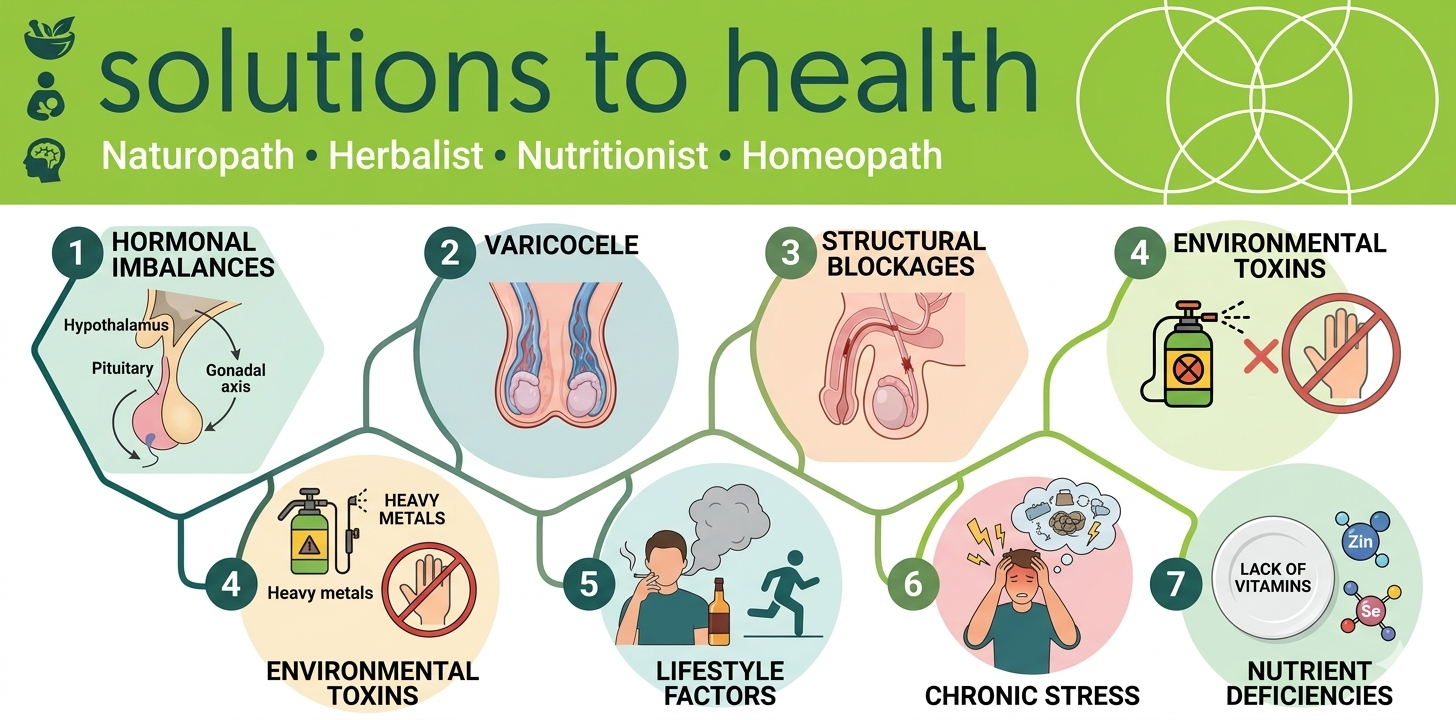
This guide explains the 7 most common causes of male infertility, how they affect reproductive health, and what practical steps men can take to improve fertility outcomes.
Before exploring the causes, it’s important to understand what male infertility actually means.
Male infertility refers to a man’s reduced ability to contribute to conception due to problems involving:
Healthy conception depends on several factors working together:
Even small disruptions in these areas can affect fertility potential.
Over the past decade, fertility specialists have noticed a growing number of men seeking help for reproductive concerns.
Several factors may contribute to this trend:
Many fertility experts now emphasize preventive male reproductive health treatment rather than waiting until couples struggle for years without answers.
One of the most common causes of Male Infertility is a low sperm count, medically known as oligospermia.
This means semen contains fewer sperm than normal, reducing the likelihood of successful fertilization.
Many office workers who spend long hours sitting with laptops placed directly on their laps may unknowingly expose the testicular area to increased heat, which can negatively affect sperm production over time.
Sperm motility refers to how effectively sperm move toward the egg.
Even with a healthy sperm count, poor movement can make natural conception difficult.
Poor motility is commonly identified during a male fertility assessment, where semen analysis measures sperm movement quality.
Many men assume fertility depends only on sperm quantity. However, experienced fertility specialists often explain that movement quality can be just as important as count.
Hormones play a critical role in sperm production and reproductive function.
Low testosterone or imbalances involving the pituitary gland can affect:
Reduced testosterone production affecting fertility and reproductive health.
Thyroid dysfunction may interfere with hormone regulation linked to sperm production.
High prolactin can suppress reproductive hormone function.
Specialized male infertility treatment plans often include hormonal evaluation and targeted therapy when needed.
A varicocele is an enlargement of veins inside the scrotum and is considered one of the leading reversible causes of male infertility.
It may:
Interestingly, many men with varicocele experience no obvious symptoms until fertility testing is performed.
Fertility specialists frequently discover varicoceles during routine examinations when couples seek help after unsuccessful conception attempts.
Modern lifestyle habits significantly affect male fertility health.
Many cases of Male Infertility involve multiple lifestyle-related factors working together.
Smoking may reduce:
Heavy alcohol use can interfere with testosterone levels and sperm production.
Excess body weight may:
Chronic stress and sleep deprivation can disrupt hormone production and overall reproductive health.
Many fertility clinics now include male fertility counselling as part of treatment planning because emotional health and lifestyle behaviors strongly influence fertility outcomes.
Counselling often helps men:
Certain inherited conditions may directly impact fertility.
A chromosomal condition affecting testosterone production and sperm development.
Genetic abnormalities that impair sperm production.
Other health issues that may affect fertility include:
Men with a history of chemotherapy or radiation should consider fertility preservation discussions before treatment whenever possible.
Infections can damage sperm production or block sperm transport.
These conditions may cause:
Blocked reproductive ducts may prevent sperm from reaching semen properly.
This is why detailed testing at a qualified male infertility clinic is essential when fertility problems persist.
Many couples wait too long before seeking fertility evaluation.
A professional male fertility assessment can help identify problems early and reduce unnecessary stress.
Measures:
Checks testosterone and reproductive hormone levels.
Evaluates reproductive anatomy and possible abnormalities.
Identifies lifestyle, medication, or health factors affecting fertility.
Early testing often helps couples make informed treatment decisions sooner.
Treatment depends on the underlying cause of infertility.
Many men benefit from:
Depending on diagnosis, treatment may include:
In some cases, fertility specialists may recommend:
Couples seeking the best Male Fertility tratment in Sydney often benefit from personalized care plans tailored to both medical and lifestyle factors.
Many physically healthy men still experience fertility challenges due to hidden hormonal, genetic, or sperm-quality issues.
Male fertility factors contribute to approximately half of infertility cases.
Fertility evaluations should involve both partners early in the process.
While supplements may support reproductive health, they cannot replace proper diagnosis and evidence-based treatment.
Weight balance supports hormone regulation and sperm production.
Frequent sauna use, hot tubs, or prolonged laptop heat exposure may affect sperm health.
Quality sleep supports testosterone production and reproductive function.
Nutrient-rich foods containing:
may support sperm quality.
Many fertility issues become easier to manage when addressed early through proper male fertility support and medical evaluation.
One aspect often overlooked in fertility discussions is emotional wellbeing.
Men experiencing fertility difficulties may feel:
This is why modern fertility care increasingly includes:
Comprehensive fertility care involves far more than medical testing alone.
Not every fertility journey requires aggressive medical intervention. The right specialist focuses on understanding the root cause first.
A qualified Male Fertility expert typically prioritizes:
At Solutions To Health, patient education and practical support play an important role in helping men better understand their reproductive health options.
Understanding the causes of Male Infertility is an important step toward improving reproductive health and finding the right support.
From low sperm count and hormonal imbalance to lifestyle habits and medical conditions, male fertility challenges can stem from multiple interconnected factors. The good news is that many causes are treatable or manageable with early diagnosis, lifestyle improvements, and professional guidance.
Seeking the best Male Fertility tratment in Sydney starts with proper assessment, accurate diagnosis, and individualized care. Whether through lifestyle changes, medical treatment, or emotional support, taking action early can make a significant difference in fertility outcomes.
At Solutions To Health, helping individuals understand fertility health through education, assessment, and evidence-based support remains a key part of long-term reproductive wellness.
Low sperm count and poor sperm motility are among the most common causes of male infertility. Lifestyle factors such as smoking, obesity, stress, and alcohol use can also contribute significantly.
Men should consider a fertility assessment if a couple has been trying to conceive for 12 months without success, or earlier if there are known medical conditions, hormonal issues, or previous reproductive concerns.
Some fertility issues improve through lifestyle changes such as better nutrition, exercise, stress management, and quitting smoking. However, medical evaluation is still important to identify underlying causes.
Yes, male fertility gradually declines with age. Sperm quality, motility, and DNA integrity may decrease over time, especially after age 40.
A male infertility clinic typically evaluates sperm count, motility, hormone levels, reproductive anatomy, medical history, and lifestyle factors to determine possible causes of infertility.

I am a Sydney based Naturopath and I am passionate about Women's Health, Natural Fertility Treatments and Infertility Management. I am also a Neurofeedback Practitioner using NeurOptimal® brain training system. I specialise in optimising Fertility, Women's health, Preconception care, Reproductive Healthcare for men and women, Miscarriage prevention and managing Menopause. I use both conventional and complementary health care methods to diagnose and treat health issues. I provide very effective treatment, using evidence based natural medicine and guide and support my patients to achieve better health. Personally, my own experience using complimentary Medicine has reinforced my belief and passion for helping people to be healthier.
Dorota Wroblewska is an experienced Naturopath and Nutritionist in Sydney. Dorota specialises in women's health, natural fertility, preconception care and reproductive healthcare for men and women. Dorota also offers natural health solutions for all health concerns, including digestive disorders, thyroid problems and adrenal dysfunction. Dorota is also a Neurofeedback trainer, using NeurOptimal® brain training system.