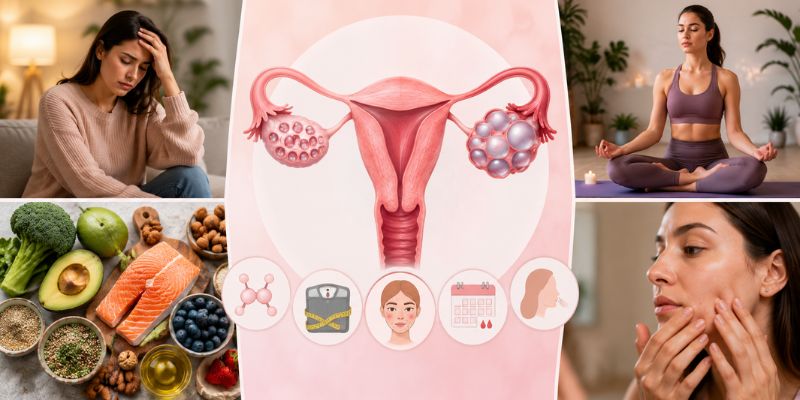
PCOS (polycystic ovary syndrome) is one of the most prevalent hormone disorders faced by women during their reproductive life; however, most cases of PCOS remain undiagnosed. Symptoms associated with PCOS can be different in various women. While some females have an irregular period along with fertility problems, other patients might suffer from obesity, excessive hair growth, acne, and insulin resistance.
As per World Health Organization (WHO) estimations, about 8% – 13% of females of reproductive age are affected by polycystic ovary syndrome across the globe. PCOS remains among the major causes of infertility in today’s world. It is believed that up to 70% of females with polycystic ovary syndrome are not diagnosed. Therefore, all women who have PCOS need to learn the reasons for this condition as well as PCOS symptoms and treatment. Awareness about PCOS treatment in Sydney can also alleviate symptoms.
Polycystic Ovary Syndrome (PCOS), contrary to what the name might suggest, does not necessarily imply the presence of cysts on the woman’s ovaries. PCOS is considered an “Endocrine and Metabolic Disorder,” which implies different kinds of hormonal disorders that can interfere with a woman’s usual ovulatory cycle or reproductive abilities, as well as increase her insulin and/or glucose resistance.
There are three important criteria for the diagnosis of Polycystic Ovary Syndrome among women, namely: 1) Anovulation/Irregular ovulatory cycles; 2) Hyperandrogenism/High levels of male hormones, such as testosterone; 3) Polycystic ovaries revealed on ultrasonography. It must be noted that cysts on the ovaries are not a necessary requirement for diagnosing or having PCOS.
Scientists have yet to find one specific factor that causes PCOS. Rather, the disorder seems to be caused by multiple factors.
A major factor contributing to PCOS is insulin resistance. According to research published in the Journal of Clinical Endocrinology & Metabolism, about 50% to 70% of women with PCOS suffer from insulin resistance.
Insulin is involved in blood glucose regulation. If the body’s cells start resisting insulin, the pancreas will release more of it into the bloodstream. Increased levels of insulin in turn stimulate increased levels of androgens in the ovaries. Androgens are male sex hormones that affect women’s bodies negatively when present in high amounts.
PCOS tends to occur in women within a family. If a woman’s mother or sister has PCOS, she has a much higher chance of developing it herself. Genetics that contribute to PCOS include those involved in:
A growing number of studies indicate that there is an increased level of inflammation markers among PCOS patients.
Low-grade inflammation contributes to:
That is why lifestyle changes are so effective in symptom control.
Every woman is different, so there are a variety of symptoms associated with PCOS. Some women find out they have PCOS during their teen years, while others learn they have it after trying to get pregnant and failing.
One symptom of PCOS is an irregular menstrual cycle caused by a lack of ovulation. This can manifest itself in a number of ways, such as:
Excess androgen (male hormone) production leads to increased hair growth in females. Common areas of excessive hair growth include:
Excessive Hair Growth in Women is Called Hirsutism.
Hormonal imbalance often causes long-lasting (persistent) acne beyond the teenage years.
Many women with PCOS find it difficult to lose weight, despite following typical diet and exercise guidelines.
WHO considers PCOS to be among the top 5 causes of female infertility (anovulatory) due to lack of ovulation.
Additional symptoms may include:
| Symptom | Possible Cause |
| Thinning hair | Elevated androgen levels |
| Fatigue | Hormonal imbalance and insulin resistance |
| Mood changes | Hormonal fluctuations |
| Sleep disturbances | Increased risk of sleep apnea |
| Skin darkening | Insulin resistance |
Take the case of Sarah, a 29-year-old woman, suffering from irregular menstrual periods for years.
Although she was physically active and maintained a healthy lifestyle, Sarah found herself gaining excess weight due to her condition. The appearance of pimples and fatigue drove her to consult a doctor.
Insulin and androgens were high according to lab test results, which implied the presence of PCOS. Sarah did not rely only on medication but also managed her diet, lifestyle, sleep patterns, and stress levels. In a year, her menstrual periods became regular, and several symptoms were significantly alleviated. Each patient’s journey with PCOS varies.
Uncontrolled PCOS can lead to various conditions, including:
It is believed that women with PCOS have up to four times higher risk of getting Type 2 diabetes than women without it, according to Diabetes Australia. Consequences of ignoring PCOS are devastating to your health.
While there is currently no known cure for PCOS, there are several scientifically proven lifestyle interventions and PCOS management support. PCOS help for women is available, embracing some natural methods.
Dietary interventions are considered the cornerstone of PCOS management by many researchers. According to scientific studies, a diet rich in whole foods helps improve insulin sensitivity and hormonal imbalance.
Key nutritional guidelines include:
As opposed to going on extreme diets, healthy nutritional choices usually lead to better results.
According to the Australian Department of Health, adults should participate in at least 150 to 300 minutes of moderate physical activity per week.
Several studies confirm that regular strength training and aerobics can help to improve:
As reported in Fertility and Sterility, reducing weight by 5% to 10% has been shown to help with ovulation and menstrual regulation. Not all women with PCOS are overweight. Some women suffer from lean PCOS.
Sleep problems are typical among women with PCOS.
Lack of sufficient sleep leads to:
Adults need between seven and nine hours of sleep nightly.
Excess stress can exacerbate hormone imbalance due to cortisol production.
Effective methods include:
These options help manage stress effectively.
PCOS specialists sometimes prescribe some supplements for PCOS natural treatment. Certain supplements show potential in managing PCOS. Examples of these supplements are listed below:
| Supplement | Potential Benefit |
| Inositol | Improved insulin sensitivity |
| Vitamin D | Hormonal support |
| Omega-3 Fatty Acids | Reduced inflammation |
| Magnesium | Metabolic support |
It is important to talk to a doctor before starting any supplement regimen.
PCOS symptoms are similar to those of other health conditions.
A patient is advised to see a doctor if she experiences:
Diagnosis usually involves:
PCOS is an intricate disorder that plagues millions of women around the world. Even though some of its symptoms, like irregular menstrual cycles, fertility problems, excessive weight gain, acne, and insulin resistance, can be severely affected, proper treatment is attainable. PCOS treatment in Sydney is to be understood if you want to get rid of it or keep it in control.
The most efficient methods tend to involve a combination of medical supervision and changes in lifestyle revolving around diet, physical activity, sleep, and coping with stress. Diagnosing PCOS at the early stages is extremely important since, apart from affecting reproductive health, this syndrome also impacts metabolic health. The best PCOS treatment can be availed from Solutions to Health. In case you think you may be suffering from PCOS, visiting an appropriate healthcare professional will help you learn more about yourself and create a personalized treatment plan.
Currently, there is no cure for PCOS. However, symptoms can often be effectively managed through lifestyle changes, medical treatments, and ongoing healthcare support.
Yes. Despite its name, a woman does not need to have ovarian cysts to be diagnosed with PCOS. Healthcare providers typically use the Rotterdam Criteria, which require at least two of the following: irregular ovulation, elevated androgen levels, or polycystic ovaries visible on ultrasound.
No. While PCOS is one of the leading causes of infertility due to irregular ovulation, many women with PCOS can conceive naturally or with medical assistance.
A balanced diet focused on whole foods may help improve insulin sensitivity and hormone balance. This typically includes vegetables, fruits, lean proteins, healthy fats, and high-fibre carbohydrates while limiting highly processed foods and excessive sugar intake.
You should consult a healthcare professional if you experience symptoms such as irregular periods, difficulty getting pregnant, excessive hair growth, persistent acne, unexplained weight gain, or thinning hair.
I am a Sydney based Naturopath and I am passionate about Women's Health, Natural Fertility Treatments and Infertility Management. I am also a Neurofeedback Practitioner using NeurOptimal® brain training system. I specialise in optimising Fertility, Women's health, Preconception care, Reproductive Healthcare for men and women, Miscarriage prevention and managing Menopause. I use both conventional and complementary health care methods to diagnose and treat health issues. I provide very effective treatment, using evidence based natural medicine and guide and support my patients to achieve better health. Personally, my own experience using complimentary Medicine has reinforced my belief and passion for helping people to be healthier.
Dorota Wroblewska is an experienced Naturopath and Nutritionist in Sydney. Dorota specialises in women's health, natural fertility, preconception care and reproductive healthcare for men and women. Dorota also offers natural health solutions for all health concerns, including digestive disorders, thyroid problems and adrenal dysfunction. Dorota is also a Neurofeedback trainer, using NeurOptimal® brain training system.